
Dad Tribes
Lonestar DadsEvents
3.322.00 Reviews
- Version
- 1.7.6
- Installs
- 10.00K
- Age Rating
- Everyone
Screenshots
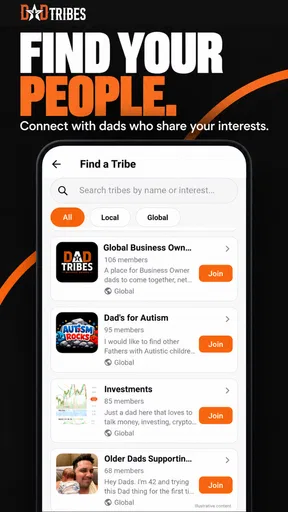
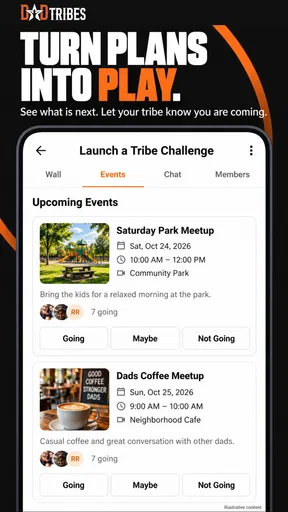
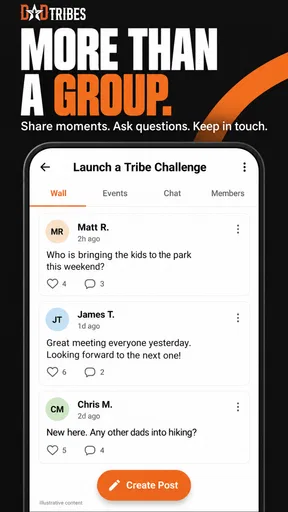
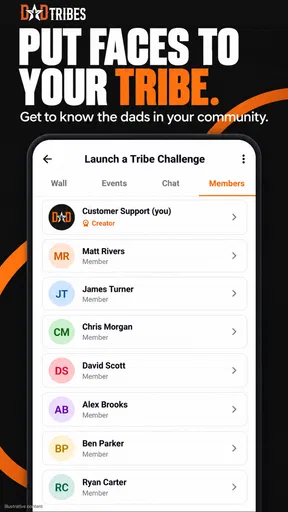
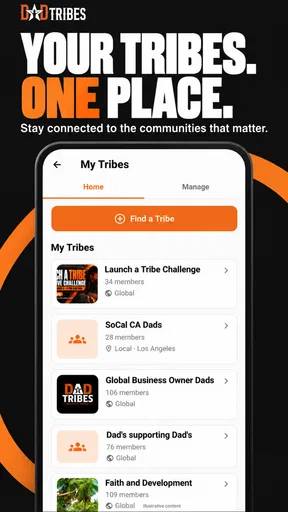
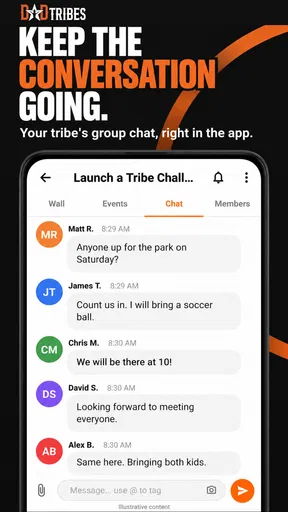
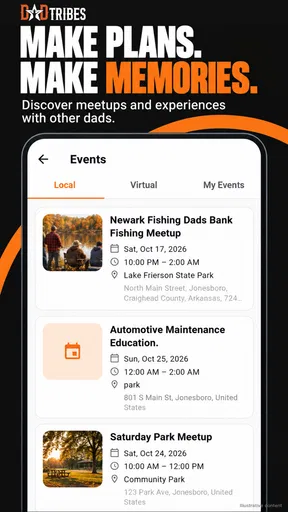
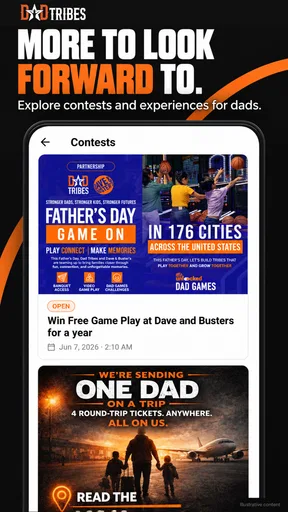
Our Review of Dad Tribes
 Analysis by Appyee
Finding useful local events as a dad can be harder than it sounds. General event apps tend to mix everything together, while social networks can bury a nearby family activity under unrelated posts. Dad Tribes takes a narrower approach: it is an events app from Lonestar Dads focused on local gatherings, contests, and giveaways for dads. After spending time with it, I see the appeal clearly, although I also think its value depends heavily on whether there is an active local audience around you.
The app is free and aimed at Everyone, which makes it easy to try without committing money or asking the whole family to adopt another paid service. It is available for Android devices running version 7.0 or later. The current release is version 1.7.6, and the app has passed the early discovery stage with over ten thousand installs. That is encouraging for a community-focused product, but it is still a relatively small footprint compared with broad event platforms.
What Dad Tribes is really useful for
The strongest idea here is not simply “events for dads.” It is the attempt to create a more focused place where a local father can find activities that feel relevant to his routine, interests, and family life. A dad looking for a weekend meetup, a local contest, or a giveaway does not necessarily want to search through a large city-events database full of nightlife, business conferences, and unrelated promotions.
I found the focused audience helpful because it changes how I think about browsing. Instead of opening the app with a completely blank question—“What should I do?”—I can approach it with a more practical one: “Is there something nearby that fits the kind of dad community I want to join?” That distinction matters. The app is less like a universal calendar and more like a local noticeboard with a clearly defined audience.
The developer, Lonestar Dads, is also central to understanding the app’s character. This is not presented as a huge, impersonal event marketplace. Its identity is tied to dads and local participation. That can make the experience feel more approachable than a mainstream platform, especially for someone who is hesitant about joining a broad social network just to discover one family-friendly activity.
At the same time, I would not treat it as a replacement for every event tool on your phone. A general calendar app remains better for managing school appointments, sports schedules, work commitments, and family logistics. A city events website may also have more complete coverage for museums, concerts, festivals, and public programs. Dad Tribes makes the most sense as a complementary discovery tool rather than the single source of truth for your entire social calendar.
A realistic weekend use case
Imagine a dad with an open Saturday afternoon and two children who need something to do. He could use a broad search engine, scroll through several community pages, or ask in a local group where people may respond slowly. With Dad Tribes, the first step is more targeted: check whether a local event, contest, or giveaway is relevant to dads and families in his area.
The practical advantage is not that the app guarantees a perfect plan. It is that it can reduce the amount of irrelevant browsing. If the local activity feed is active, a dad may discover an option he would not have found through his normal routine. He can then decide whether the timing, location, and format work for his family before spending time organizing the rest of the day.
My advice is to use it during planning moments rather than only when you are already bored. A quick check early in the week gives you time to consider travel, childcare, weather, and whether the event suits your children. Local activities often require more preparation than their short descriptions suggest, so treating the app as an early discovery step makes it more useful.
Trust starts with the narrow purpose
For a community app, trust is not only about technical security. It also comes from understanding why the app exists and what kind of interaction it encourages. Dad Tribes has a plainly defined purpose: local events, contests, and giveaways for dads. That narrow scope is easier for me to evaluate than an app that tries to be a messaging service, marketplace, news feed, payment platform, and event organizer at the same time.
Still, a focused purpose does not automatically answer every privacy question. When an app connects people with local activities, users should pay attention to the choices presented during setup and whenever they interact with an event. I would read each permission request and account prompt instead of tapping through automatically. If the app asks for information that is not needed for the way you plan to use it, I would pause and consider whether the benefit is worth the disclosure.
This is especially important for parents. An event may be intended for dads, but that does not mean every detail about your children belongs in an app. I would avoid sharing children’s full names, school information, home address, or predictable weekly routine. You can usually decide whether an activity is suitable without turning a simple event inquiry into a detailed family profile.
Verified controls and visible choices
My approach to Dad Tribes is to judge trust through the controls I can actually see, not through assumptions about what happens behind the scenes. Before using any community feature, check whether the app gives you clear choices about account details, notifications, location access, and participation. The best experience is one where you understand what you are enabling and can change your mind later.
Location deserves particular attention in a local-events app. A nearby activity is useful, but precise location access can reveal more than you intend. If the app offers a choice between allowing access only while in use, entering a general area manually, or declining location access, I would choose the least revealing option that still supports discovery. If you can browse without continuous access, there is little reason to leave that permission active all the time.
Notifications should be handled with the same care. Event reminders can be helpful, especially when a contest or local gathering has a limited window. However, frequent promotional alerts can quickly make a community app feel noisy. I recommend enabling only the categories that genuinely help you, then reviewing the setting after a few days. A useful notification should save you time, not force you back into the app repeatedly.
Account controls matter as well. Before creating a profile, look for the available options to edit personal details, adjust visibility, manage notifications, and remove the account if you decide to stop using the service. I do not assume every app offers the same level of control, so I check these areas early rather than waiting until I have built up a history of activity.
Data-sensitive moments to handle carefully
The most sensitive point is often not installation; it is participation. Entering a giveaway, responding to an event, or contacting an organizer can invite requests for additional information. My rule is simple: provide only what is necessary for that specific interaction. A first name or a way to receive an event update may be reasonable, while detailed family information is not something I would share casually.
Contests and giveaways deserve extra caution because they can create a sense of urgency. A limited-time offer may encourage quick decisions, but I would still inspect what the entry requires, who appears to be organizing it, and what communication follows. I would be particularly careful if an interaction moves outside the app and asks for payment details, identity documents, or unusual personal information. The app’s event focus does not make every individual offer automatically trustworthy.
Locality can also become identifying. A broad neighborhood may be enough to find a useful activity, but combining an exact location with children’s ages, school details, and regular attendance patterns can create an unnecessary profile of your household. I recommend keeping public-facing information general and discussing precise meeting details privately only when you are comfortable with the other participants.
Another practical point is device sharing. Parents often hand a phone to a child or share devices with a partner. Before doing that, I would check whether notifications reveal event participation or account details on the lock screen. If they do, adjust notification previews through the device settings. This is a small step, but it prevents casual exposure of information that you may prefer to keep private.
Where the app’s community model helps—and where it can disappoint
The quality of a local events app depends on activity. When there are current listings and people actually participating, the focused audience becomes a real advantage. You can spend less time filtering irrelevant results, and the tone may feel more welcoming than a large public platform. The app’s rating sits at a 3.3 average from roughly fifty ratings, with a little over twenty written reviews. I read that as a mixed but still developing signal: there is enough user feedback to show interest, yet not enough to make the experience predictable in every location.
This creates the app’s biggest trade-off. A broad service can feel impersonal, but it usually has more listings. Dad Tribes can feel more relevant, but a quiet local community may leave you with little to browse. If you live in an area where Lonestar Dads has visible activity, the app may become a handy weekly check-in. If local participation is thin, you may open it several times and find that the narrow focus works against it.
I would not judge the app after one empty visit. Local events are time-sensitive, and the feed can change. Instead, check it at different points in your planning cycle and compare what you find with local parent groups or community calendars. If Dad Tribes repeatedly surfaces activities that match your interests, keep it. If it duplicates information you already receive elsewhere without saving effort, it may not deserve a permanent place on your home screen.
The app is also not the right choice for someone seeking a full social network with extensive private messaging, photo sharing, or long-running group discussions. Its appeal is the event-oriented purpose. Users who want deep community management may be better served by a dedicated group platform, while users who only need dates and reminders may prefer a calendar. Dad Tribes sits between those options, emphasizing discovery and local dad-oriented participation.
How I would use it efficiently
I would begin with a deliberately small profile. Add only the information needed to make the app useful, and avoid treating the account as a public biography. Then I would review the permission prompts one by one, especially location and notifications. This gives me a cleaner baseline and makes it easier to understand which choices affect the experience.
Next, I would establish a simple routine: check the app once when planning the weekend, save or note any promising event details, and turn off alerts that do not lead to useful actions. This prevents the app from becoming another endless feed. The goal is to use it as a local discovery window, not as a replacement for direct planning with family and friends.
When an event looks worthwhile, I would verify the practical details before committing. Check the time, location, age suitability, expected cost outside the app, and whether an adult needs to remain present. Even when an event appears in a dad-focused service, the listing may not answer every question a parent has. A quick message to the organizer or a second look at the event information can prevent an avoidable trip.
I would also keep a boundary between discovery and disclosure. Use the app to find possibilities, but do not publish your complete schedule or identify where your children spend their weekdays. If you meet people through a local event, choose a public setting and let trust develop gradually. That is sensible community behavior whether the first connection began in an app, a school group, or a neighborhood noticeboard.
Who should try it, and who should skip it
Dad Tribes is a good fit for dads who want local ideas without sorting through a general-purpose events service. It is particularly appealing if you enjoy low-pressure community activities, contests, and giveaways, and if you are willing to check whether your area has an active presence. The free price removes the financial barrier, so trying it briefly is reasonable for most compatible Android users.
I would recommend caution for anyone who expects a dense, constantly updated catalog in every city. The app’s focused audience is its identity, but that same focus can limit coverage. It may also disappoint users who want a polished personal calendar, extensive family scheduling, or a broad list of events unrelated to dad communities.
Privacy-conscious parents can still try it, but only with intentional settings and restrained sharing. The key is not to assume that a family-oriented purpose makes every interaction low-risk. Review visible controls, use the minimum permissions that support your needs, and treat contests and direct contacts as moments requiring extra attention.
My cautious verdict
After reviewing Dad Tribes as an events app, I see a worthwhile idea with a very specific audience. It can make local discovery feel more relevant for dads, especially when the surrounding community is active. The free access and Everyone age rating make experimentation easy, while the latest version shows that the app is still being maintained as it develops.
My recommendation is conditional rather than automatic. Install it if you want a dad-centered way to look for local activities and you are comfortable evaluating the listings and account choices yourself. Give it a fair trial across more than one planning cycle, but do not abandon your existing calendar or local information sources immediately.
The best way to use Dad Tribes is as a focused discovery tool with careful personal boundaries. It should help you find possibilities, not replace judgment about organizers, locations, family privacy, or event suitability. For the right local audience, that focused approach may be exactly what is missing. For everyone else, a broader events service may still offer more dependable coverage.
Verdict
Strengths of Dad Tribes
- Simple tribe-based gameplay is easy to understand and start playing.
- Short sessions make it suitable for quick breaks or casual play.
- Progression gives players goals beyond the opening levels.
- The colorful presentation keeps the game approachable for younger players.
- Regular challenges can add variety for players who enjoy routine objectives.
Limitations of Dad Tribes
- Some upgrades may require considerable time or repeated grinding.
- The gameplay can feel repetitive once the initial novelty wears off.
- Difficulty may increase sharply in later stages.
- Limited strategic depth could disappoint experienced strategy players.
- Ads or optional purchases may interrupt the free-to-play experience.
Similar Picks in This Category
View All
Easy Quran Mp3 Audio Offline
Muslim Worldapp4.7

Invitation Maker: Cards & RSVP
Greetings Island4.9

StubHub - Live Event Tickets
StubHub4.3

Fever: Events & Tickets
Fever Labs4.7

Epic Freebie Games Radar
Arioch Pds - Apps & Games4.4

Invitation card Maker, Design
Splendid App Maker4.9
Frequently Asked Questions
What is Dad Tribes, and what can users do in the app?
Dad Tribes is designed as a community-oriented app for fathers who want to connect, exchange advice, and discover conversations related to parenting and family life. Depending on the available features, users may be able to create a profile, browse discussions, join groups, share experiences, and interact with other dads. It is best suited to people looking for peer support rather than a formal parenting course or professional counseling service.
Is Dad Tribes free to download and use?
Dad Tribes may be available to download at no initial cost, but users should check the current listing in the Google Play Store or Apple App Store for the latest pricing information. Some community apps offer optional subscriptions, premium content, or in-app purchases for additional features. Before registering or subscribing, review the payment terms, renewal details, and cancellation policy so there are no surprises after the trial period or promotional offer ends.
Is Dad Tribes suitable for every father or parenting situation?
The app can be useful for fathers at different stages of parenting, including those expecting a child, raising young children, or looking for advice about family routines and relationships. However, the quality and relevance of discussions can vary because much of the content may come from other users. Dad Tribes should complement, not replace, advice from pediatricians, therapists, legal professionals, or other qualified specialists when a serious issue is involved.
How safe and private is the Dad Tribes community?
Before joining, users should read Dad Tribes’ privacy policy and community guidelines to understand how profile information, messages, photos, and other contributions are handled. Avoid posting sensitive details such as a child’s full name, school, home address, medical records, or daily schedule. Use available blocking and reporting tools if another member behaves inappropriately, and remember that online communities cannot guarantee that every shared post remains completely private.
What should I check before downloading Dad Tribes?
Check whether your Android or iOS device meets the app’s current requirements and whether the latest version is supported in your country. It is also worth reviewing recent user ratings, update history, permissions, subscription information, and the developer’s support contact. A stable internet connection may be necessary for community features. Finally, consider whether you are comfortable creating an account and participating in a social environment where conversations and activity may be visible to other members.
